Grok by SpaceXAI in 2026: A Review of Elon Musk's AI
AI models in this article
Grok, built by Elon Musk’s SpaceXAI (formerly xAI), sets itself apart from ChatGPT and Claude in two ways: it skips most of the heavy content filtering (“political correctness”) and it reads the X feed in real time.
In June 2026, SpaceX absorbed xAI and formed SpaceXAI – one company covering rockets, Starlink satellite internet and AI. An agent ecosystem has grown up around the model: the current flagship is Grok 4.6 (August 12, 2026), while Grok 4.5 (June 2026, 1.5 trillion parameters) is the version we have our own measurements for in the mysummit.school benchmark.
Update: Grok 4.6, the 200K-token price cliff and Grok Bot (September 2026)
Grok 4.6 – the current flagship
Grok 4.6 shipped on August 12, 2026, five weeks after Grok 4.5. The context window is unchanged at 500K tokens. It takes text and images in and returns text only. It adds four reasoning effort levels: low, medium, high (the default) and xhigh. Reasoning effort is now a line item: the same question on high and on xhigh produces a different bill and a different wait.
The model isn’t in our benchmark yet, so the figures below come from the vendor and from independent leaderboards.
Artificial Analysis scores Grok 4.6 (high) at 51 on its Intelligence Index. That puts it fourth in their table, and its blended price of $1.25 per million tokens is the lowest in the top five. The three models above it cost more: from $2.57 for GPT-6 Astra to $6.12 for Claude Fable 5.1. Whether the six-point gap to the leader is worth paying for depends on the task. Buying the top row of a leaderboard by default no longer makes sense.
LMArena’s human-preference board tells a different story: Grok doesn’t appear in the September top 10 for text at all, and the confidence intervals of the top nine overlap – statistically, a tie. The two sites measure different things. One grades answers against a rubric; the other asks people which answer they’d rather read. We covered why leaderboard positions shouldn’t be taken at face value in AI Benchmarks Are Losing Their Meaning.
The price doubles past 200K tokens
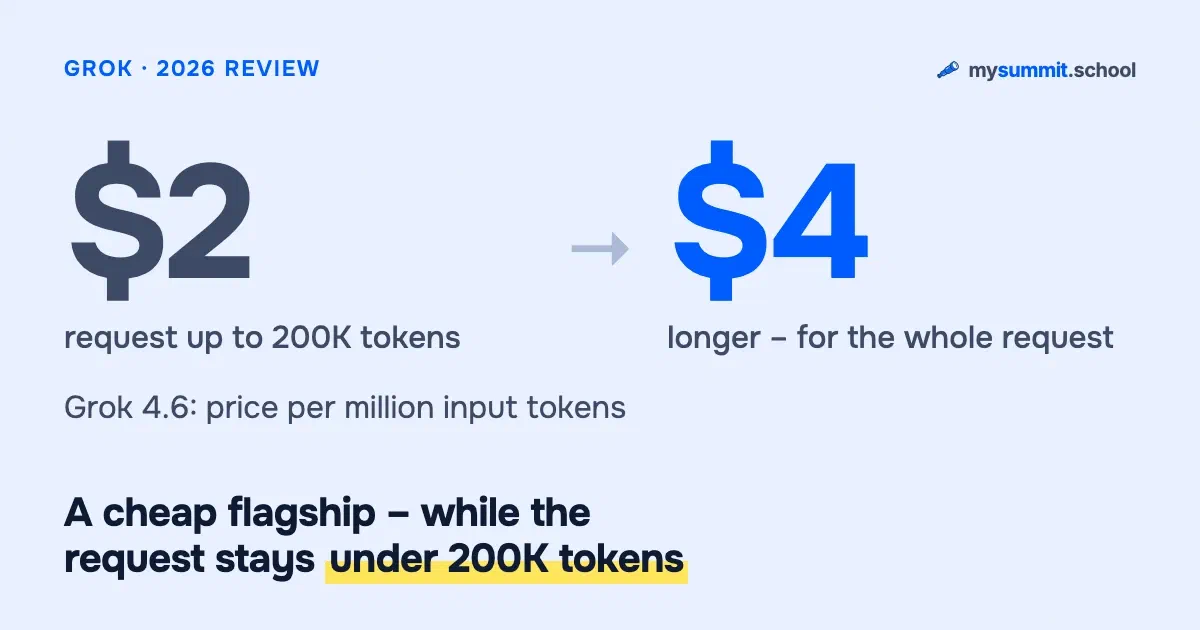
Grok 4.6 pricing depends on prompt size. Per xAI’s price list, up to 200K tokens you pay $2 per million input tokens, $0.50 for cached input and $6 for output. Above that threshold all three rates double: $4, $1 and $12.
The higher rate applies to the entire request. A 210K-token prompt costs twice as much as a 190K-token one, even though the difference is ten thousand tokens out of two hundred thousand. In long agent sessions, where the context gets resent on every turn, the bill jumps while the amount of work stays the same.
GPT-6 Astra uses the same mechanism with a 272K threshold. A big context window on the spec sheet plus a doubled rate for its upper half is becoming the standard way flagships are sold.
Google and Microsoft now resell Grok 4.6
The model is available on Google Enterprise Agent Platform and Microsoft Foundry. For a company already buying from either of them, that’s a shortcut: the model slots into an existing contract, with no separate procurement from xAI.
Grok Bot – agent capacity bundled into the subscription
The Grok Bot beta launched in early August and was expanded on August 21. These are autonomous workers: each gets its own cloud computer with a browser and terminal, plus app integrations. The enterprise layer covers access control, network policy management and audit.
Grok Bot is included in SuperGrok Plus, SuperGrok Heavy and the Cursor Pro+, Cursor Ultra and Cursor Teams subscriptions; Enterprise customers get a two-week trial. The practical point for a manager: agent capacity comes with a subscription your team may already be paying for. If your developers use Cursor, they already have Grok Bot, and the conversation you need to have is about permissions and audit. The budget has already been spent.
Media: 1080p, five source images and X account linking
- grok-imagine-video-1.5 (July) – video from text, from an image and from a reference, with a choice of preset voices; native 1080p for text-to-video and image-to-video.
- Grok Voice Think Fast 2.0 (July) – speech-to-speech; the
grok-voice-latestrouting was updated on August 5. - Imagine image API (August 28) – editing now accepts up to 5 source images instead of 3, adds 21:9 and 5:2 aspect ratios, and the quality parameter defaults to
auto. grok-imagine-image-qualityis being retired on November 2, 2026: its requests will move togrok-imagine-image-2.0atlowquality and a lower per-image price.- On August 29, direct X account linking arrived, along with API credits and tools for working with the feed and mentions.
Grok 5 hasn’t shipped
As of September 2026, Grok 5 is still training on Colossus 2, with no release date. The numbers floating around it – 10 trillion parameters, seven models in training – have not been confirmed by xAI. There’s nothing to plan around: no spec and no date.
Update: SpaceXAI, Grok 4.5 and Grok Build (July 2026)
SpaceX absorbs xAI
In June 2026, SpaceX officially acquired xAI. The new company is called SpaceXAI and brings together AI, rocketry and Starlink. For Grok users little has changed so far – the interface and API work as before – but strategically Musk now has a single structure for integrating AI into space infrastructure, Tesla’s autonomous driving and X moderation.
Separately, xAI (before the merger) acquired Cursor, the popular AI code editor, in a deal worth roughly $60 billion. Cursor data is used to train Grok: Grok 4.5 was trained in part on real developer sessions.
Grok 4.5 – the June flagship
 Grok 4.5Digs into details
score 6.9/10 rank 24 of 74 $0.028 per task VPN needed
Tested in the mysummit.school benchmark: July 2026About the model →Compare →
Grok 4.5 launched in June 2026. V9 architecture, 1.5 trillion parameters, a 500K-token context window. It’s a big step up from Grok 4.3: where both models sit in the mysummit.school benchmark is shown in the card above.
- Information search6.2
- Data analysis7.0
- Decisions under uncertainty7.3
- Feedback analysis7.1
- Corporate requirements and risks6.9
- Automation6.9
- People management7.6
- Russia and Kazakhstan specifics5.7
Grok 4.5’s key results:
- Beats Claude Opus 4.7 at a noticeably lower output-token price.
- Team management is its category: its conflict-resolution scripts are the best we’ve seen in the benchmark.
- Weak spot: information lookup. It doesn’t know the Russian labor and tax law our benchmark tasks are built on.
- In the same price bracket, Xiaomi’s MiMo v2.5 Pro is worth a look.
Grok 4.3 costs the same as GPT-5.4 Nano but ranks lower. There’s no scenario where 4.3 beats its direct competitors.
Grok Build – an agent that works toward a goal
Grok Build (/goal mode) is an agentic mode in which Grok carries out multi-step tasks: research, document generation, reports. You set the goal; Grok breaks it into steps, executes them and hands back the result.
Grok 4.6 and 4.5 are worth using for team conflict resolution, weekly reports to your manager, quarterly planning and autonomous research through Grok Build. Skip them when you need local legal and regulatory knowledge (in our tests, Russian and Kazakh law), precise data or statistics.
Quick Start
If you’re new to Grok, here’s how to get going in 30 seconds:
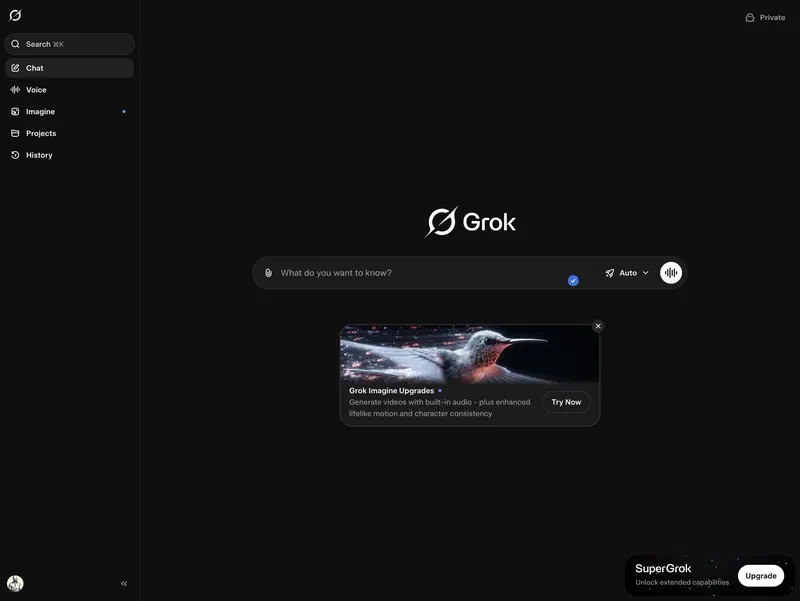
- Via X (Twitter): tap the Grok icon in the left or bottom menu. Requires a Premium subscription.
- Directly: go to grok.com or download the mobile app.
- In a Tesla: press the voice control button on the steering wheel and say “Grok, navigate to…” or ask any question.
Key Advantages
- Real-time X data – Grok reads the X post stream directly, so events show up in its answers as they happen. No other AI system is wired into a social network’s data stream. Useful for monitoring news, market trends and public sentiment.
- Image, video and audio generation (Grok Imagine) – with grok-imagine-video-1.5, video is built from text, an image or a reference in native 1080p, and preset voices are available; previously the ceiling was 10 seconds at 720p. By January 2026, more than 1.2 billion videos had been generated with Grok Imagine. The developer API costs $0.05 per second, cheaper than competitors. Quality trails Sora 2 and Kling 3.0, but minimal content filters and Extend from Frame (stitching clips into longer sequences) make Grok Imagine a handy rapid-prototyping tool.
- Video input (Grok 4.3) – upload videos up to 5 minutes long for analysis with an understanding of the timeline. Neither Claude nor ChatGPT supports native video analysis through their APIs yet. Grok 4.6’s spec lists only text and images as input, so video analysis stays on 4.3.
- Voice control (Grok Voice) – built into Tesla cars for natural-language navigation and vehicle controls. The speech-to-text and text-to-speech APIs cost $4.20 per million characters, 86–92% cheaper than OpenAI. July added Grok Voice Think Fast 2.0 – speech-to-speech with no intermediate transcript.
- Minimal censorship – Grok follows a “maximum truth-seeking” principle and answers hard questions more bluntly than its competitors.
Grok Models (September 2026)
Grok 4.6 – the current flagship since August 12, 2026. 500K-token context window, text and images in, text out. Four reasoning levels: low, medium, high (default), xhigh. API: $2 per million input tokens, $0.50 cached and $6 per million output for prompts up to 200K tokens; above that, $4, $1 and $12, with the higher rate applied to the whole request. Available via the xAI API as well as Google Enterprise Agent Platform and Microsoft Foundry. Not yet tested in our benchmark.
Grok 4.5 – the previous flagship, released in June 2026. V9 architecture, 1.5 trillion parameters, 500K-token context window. Trained on the Colossus 2 supercluster, including data from Cursor (after the acquisition). Supports Grok Build (/goal) for autonomous task execution. Available in SuperGrok and via API; the model card above shows its pricing and ranking.
Grok 4.3 – the flagship before that, released April 30, 2026. 1M-token context window, knowledge cutoff November 2024. Reasoning is always on and can’t be turned off. Output speed around 207 tokens per second. Native video input (up to 5 minutes), PDF/XLSX/PPTX generation. Available via the SpaceXAI API, OpenRouter, Azure AI Foundry and Oracle OCI. Hover over Grok 4.3 for pricing and ranking.
Grok 4.20 – an earlier flagship (released March 10, 2026), built on the “Rapid Learning” architecture with weekly fine-tuning. 2M-token context window – the largest of any model. Reasoning can be toggled through an API parameter. Its strength is agentic tool calling with a very low hallucination rate – at least, that’s how the vendor pitches it.
Core capabilities of 4.20:
- Multi-agent system: 4 or 16 parallel agents (depending on reasoning level) for fact-checking and answer synthesis.
- Medical analysis: upload test results, scans and lab data directly for a “second opinion.”
- Deep Search: multi-step research on a topic, cross-checking data across sources.
Grok 4.1 Fast – a speed-optimized model with a 2M-token context, tens of times cheaper than the flagships. Available via API and partner services (Microsoft Copilot Studio, Azure). The sensible choice for routine queries and high-volume pipelines.
Grok Code Fast 1 – a dedicated coding model with visible reasoning traces.
Colossus 2 – SpaceXAI’s compute base now spans two superclusters: Colossus 1 (230,000 GPUs) and Colossus 2 (550,000 GPUs, 2 GW of power, Memphis, Tennessee). Grok 5 is training on Colossus 2; there’s no release date, and xAI hasn’t confirmed the published specs.

The feature list here is longer than the list of problems it solves. Reasoning effort changes the price of an answer, the 200K-token threshold changes it too, and Grok Bot comes bundled with a subscription your team has already paid for. None of the three is visible on the spec sheet – each surfaces in the first real invoice and in the first argument about who’s allowed to launch an agent. The gap between “the model fits” and “the model fits your process” can only be tested on your own tasks.
Try Grok Right Here
Below is a real management prompt where directness matters. Grok is known for answering without hedging – compare it with DeepSeek, which tends toward a more diplomatic style at a similar level. Hit the button and judge the difference yourself.
You
You're the CEO of a 40-person startup. Your CTO (co-founder, 5 years together) has become a bottleneck over the past six months: blocking senior engineering hires, refusing to delegate architecture decisions, publicly criticizing the product team's ideas during demos. After due diligence, an investor told you directly: "We won't close the round with the current CTO." Give me an honest assessment: what are the realistic options, what are the risks of each, and what would you do as CEO? No fluff, no diplomacy – I need a straight conversation.
How Managers Can Use Grok
Getting access: Grok is available directly through grok.com, the mobile apps and the xAI API. Grok 4.5 and 4.3 are also on OpenRouter, so you can call them via API without a separate SpaceXAI account. If your company already buys from Google Cloud or Microsoft, Grok 4.6 can go through Google Enterprise Agent Platform or Microsoft Foundry under your existing contract.
Preparing for difficult conversations – Grok answers more bluntly than its competitors. Useful when you’re getting ready for a termination conversation, a salary negotiation or a conflict inside the team.
Deep research and fact-checking – Deep Search in Grok 4.20 runs a multi-step investigation of a topic, cross-checking data from different sources.
Creating visual content – with Grok Imagine you can generate images for presentations, team newsletters and onboarding materials without a designer. Since August 28, editing accepts up to 5 source images at once – you can assemble a slide from several references in a single request.
Corporate agents – with Grok Business and Grok Enterprise, companies can build their own agents trained on internal data. In August, Grok Bot joined them: autonomous workers with their own cloud computer, browser and terminal, plus access control, network policies and audit.
Minimal censorship cuts both ways. Grok can be overly blunt or pick up unverified claims from social media. Double-check the facts before any critical business decision.
Comparison with Competitors (September 2026)
Comparing models on vendor-reported numbers is pointless: each one picks its own set of tests. The data below comes from Artificial Analysis, where every model runs through the same index. One important caveat: the site publishes the index in versions and rescales it between them, so a score from a vendor’s July blog post and a score from the live board are not comparable. Only compare within a single snapshot.
| Model | Intelligence Index | Blended price, $ per 1M | Output, tokens/s |
|---|---|---|---|
| Claude Fable 5.1 (max) | 57 | $6.12 | 70 |
| GPT-6 Astra (max) | 55 | $2.57 | 71 |
| Claude Opus 5 (max) | 54 | $4.21 | 58 |
| Grok 4.6 (high) | 51 | $1.25 | 63 |
| Kimi K3 (max) | 50 | $1.58 | 42 |
Between the first and fourth rows there are six points of quality and an almost fivefold difference in price. For a budget, the price column usually carries more weight, and on that column Grok 4.6 looks like a strong offer among the flagships.
There’s a catch in how the figure is calculated. The $1.25 blended price assumes requests under 200K tokens; above the threshold the rate doubles, and in long agent sessions Grok 4.6 stops being cheap. If your use case is a ten-message exchange, the number in the table holds. If it’s an agent that passes the entire project context at every step, run the math again.
Our Benchmark Results
We tested six Grok models on management tasks in the mysummit.school benchmark – from planning to conflict resolution. The gap between generations is huge.
Grok 4.5 is especially strong in team management and planning, weaker in information lookup. In cost per task it’s close to MiMo v2.5 Pro.
Grok 4.3 sits in the bottom half of the ranking. For the same money, GPT-5.4 Nano is the more practical choice: we found no scenario where 4.3 beats its direct competitors.
The earlier models (4.1 Fast, 4 Fast, Grok 4, Grok 3) land in the bottom quarter of the ranking. A counterintuitive pattern holds: the Fast versions consistently beat the full models. That’s not typical of other families (GPT, Claude, Gemini).
Learning and development is the Grok family’s weakest category. If you plan to use AI for training materials and career plans, Grok isn’t the best pick. It wins on real-time X integration and minimal content filtering; on analytical power, the leaders of the ranking are ahead.
Grok 4.6 isn’t in our benchmark yet – it came out on August 12 and we haven’t run it. Grok 5 hasn’t shipped: it’s training on Colossus 2, with no date. How these measurements work and where exactly they mislead is covered in How LLM Benchmarks Work in 2026.
One more prompt – an analytical task where depth of reasoning matters. Grok 4.3 has reasoning always on, Grok 4.5 lets you choose how deep it goes, and DeepSeek answers in its usual manner. Compare the three:
You
A company (B2B SaaS, $2M ARR, 25 people) is losing customers: churn grew from 3% to 8% in one quarter. Support says "customers complain about bugs," sales says "competitors are undercutting on price," product says "we need new features." You have data: NPS dropped from 45 to 28, average support response time grew from 2 to 6 hours, and competitors haven't cut prices this quarter. Run a root cause analysis: what's actually happening, which hypotheses should be tested first, and what's the 30-day action plan?
Pricing
- Free ($0): Grok 4, roughly 10 prompts every 2 hours – enough to try it out.
- X Premium ($8/mo): higher Grok limits, a verified X account.
- SuperGrok Lite ($10/mo): available since March 25, 2026 – Grok 4, basic Grok Imagine, 1 agent, video up to 480p/6 sec. For people who want Grok without an X subscription.
- SuperGrok ($30/mo): full access to Grok 4.5 and Grok 4.3, unlimited image generation, DeepSearch, voice mode, Grok Build (/goal), roughly 100 prompts every 2 hours.
- X Premium+ ($40/mo): everything in SuperGrok plus X Premium features (ad-free, higher posting limits).
- SuperGrok Heavy ($300/mo): immediate full access to Grok 4.5, Grok Heavy with 16 parallel agents, maximum limits. For researchers and professional workloads.
- Grok Bot: included in SuperGrok Plus, SuperGrok Heavy and the Cursor Pro+, Cursor Ultra and Cursor Teams subscriptions. Enterprise customers get a two-week trial. You don’t pay separately for the agents. The real question is who on the team is allowed to launch them.
- Grok Enterprise: custom terms for large organizations. Partnerships with Gen Digital (Norton), Oracle and Microsoft Azure, and now Google Enterprise Agent Platform and Microsoft Foundry as channels for Grok 4.6.
Useful Links
The tools in this series change faster than the habits of working with them. Grok 4.6 arrived five weeks after Grok 4.5, and not a single prompt got any better on its own as a result.
That leaves an awkward question. Directness is the main reason to choose Grok – and the main reason not to trust it. Who on your team will notice when a straight answer turns out to be wrong?
This article is part of the GenAI Tools Review 2026 series. Every tool is covered with hands-on exercises in the mysummit.school course.
Other parts of this series
 Part 1
ChatGPT in 2026: What Changed and Where Managers Should Start
 Part 2
Claude by Anthropic in 2026: Opus 5, Fable 5.1, Mythos 5.1, Cowork and Chrome – a Manager's Guide
 Part 3
Perplexity AI in 2026: A Manager's Guide to the Smart Answer Engine
 Part 4
Google Gemini in 2026: Models, NotebookLM and Workspace Integration
 Part 6
YandexGPT in 2026: A Review of Russia's AI Platform for Business
 Part 7
DeepSeek in 2026: V4-Pro and V4-Flash Reviewed After the Price Hike
 Part 8
GigaChat in 2026: Honest Review – Is It Worth Using for Work?
 Part 9
Qwen by Alibaba in 2026: Open Weights Are Back at the Top
 Part 10
LLM Benchmarks Explained: MMLU, Chatbot Arena & SWE-bench Leaderboard (2026)
 Part 11
AI for Media Creation in 2026: Images, Video, Music and Presentations
 Part 12
GenAI Tools Comparison 2026: Which AI Should a Manager Choose?
 Part 13
Chat Z.AI (GLM-5) in 2026: The Chinese Model That Pretends to Be Claude
 Part 14
Kimi by Moonshot in 2026: K3, K2.6, K2.7-Code and Agents for Managers
 Part 15
GigaChat at Work: Getting the Most Out of Russia's Sovereign AI
 Part 16
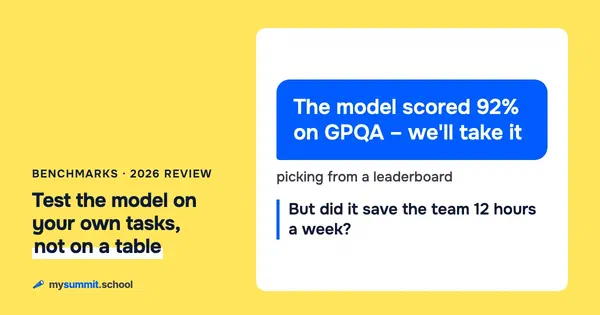
AI Benchmarks Are Losing Their Meaning – So How Do You Pick a Model?
 Part 17
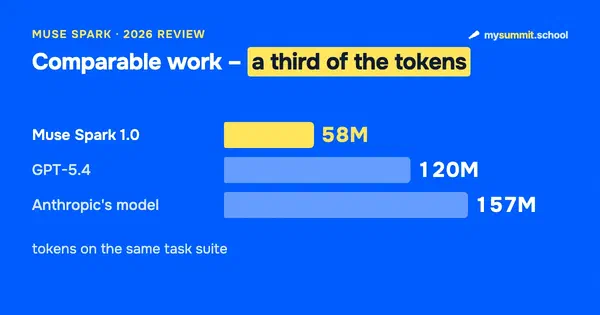
Meta Muse Spark: Meta's First Closed Model Since 2023
 Part 18
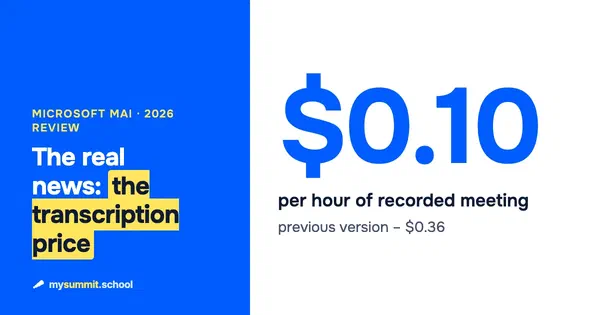
Microsoft MAI Models in 2026: What You Can Actually Use, and What It Costs
 Part 19
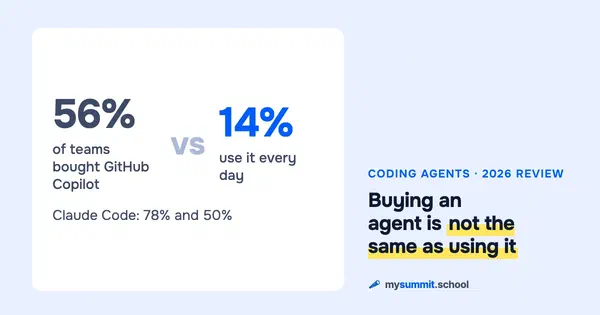
Coding Agents in 2026: Two Form Factors – Terminal and Desktop
18 years leading engineering teams. Founder of mysummit.school. 700+ graduates at Yandex Practicum and Stratoplan.