GenAI Tools Comparison 2026: Which AI Should a Manager Choose?
AI models in this article
By September 2026 the generative AI market holds dozens of tools. Every vendor claims the lead, and the marketing gets louder with each launch. So how does a manager pick a tool that actually gets the work done?
This article pulls together the key facts on the major GenAI tools we covered in depth across our review series: summary tables, recommendations by scenario, and practical advice on choosing.
Between the July and September versions of this page, almost every flagship in the tables changed. OpenAI, Anthropic, Google, xAI, Alibaba and Z.ai all shipped new top-tier models within six weeks. Below is what actually changes a manager’s decision and what will stay in the press releases.
The lineup as of September 6, 2026
| Vendor | Current flagship | Release date | What the July version of this article listed |
|---|---|---|---|
| OpenAI | GPT-6 Astra | September 3 | GPT-5.6 Sol |
| Anthropic | Claude Fable 5.1; workhorse model – Opus 5 | September 1 and July 24 | Opus 4.6 / 4.8 |
| Gemini 3.8 Flash; no top-tier model | September 2 | Gemini 3.1 Pro | |
| xAI | Grok 4.6 | August 12 | Grok 4.5 |
| Alibaba | Qwen3.8-Max | August 3 | Qwen 3.6 Plus / 3.7 Max |
| Z.ai | GLM-5.3 and GLM-5.3-Flash | August 14 and 26 | GLM-5.1 / 5.2 |
| DeepSeek | V4-Pro, now GA | August 13 | V4-Pro / V4-Flash |
| Moonshot | Kimi K3 | July 16 | unchanged |
| Sber | GigaChat 3.5 Ultra, now under MIT | July | unchanged |
| Yandex | Alice AI, YandexGPT 5.1 Pro | July 28 | unchanged |
None of the models released after July 16 is in our benchmark yet. Everything below about GPT-6 Astra, Claude Fable 5.1 and Opus 5, Gemini 3.8 Flash, Grok 4.6, Qwen3.8 and GLM-5.3 rests on vendor data and on two independent leaderboards – Artificial Analysis and LMArena. Our own benchmark results describe the July lineup, and we flag that every time.
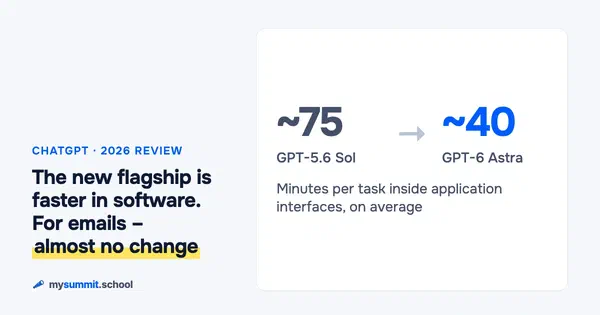
We dropped the historical note on GPT-5.4 from the March version of this article: within six months it was replaced by GPT-5.6 Sol, and now by Astra. One consequence of that release survives – computer use is no longer a rarity. Astra pushes exactly that further: on OSWorld V2-Offline the model scores 72.6% according to OpenAI, against 65.7% for GPT-5.6 Sol, and spends around 40 minutes per task instead of 75. The coding gain is more modest – 74.1% on DeepSWE v1.1 against 72.7%.
mysummit.school benchmark results (July 2026)
Since this article first appeared, we at mysummit.school, an education platform, ran an independent benchmark of 47 models. The models worked through real management tasks, and two judge models scored the answers – Claude Opus 4.6 and Gemini 3.1 Pro. The method and the scale are described on the benchmark page.
The boundary is simple: these results are ours, and they cover the models we actually ran. Anything vendors released after July 16 is missing and will show up only after the next run.
Key findings:
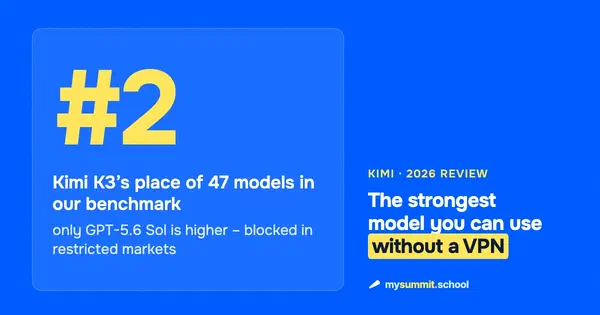
- At the top are GPT-5.6 Sol from OpenAI and Kimi K3 from Moonshot – first and second in the July run. Kimi K3 is the strongest non-US model in the ranking.
- Chinese models made the top 10. Besides Kimi K3, there are MiniMax M3 and Xiaomi’s MiMo v2.5 Pro. All three cost 5–10x less than their Western counterparts.
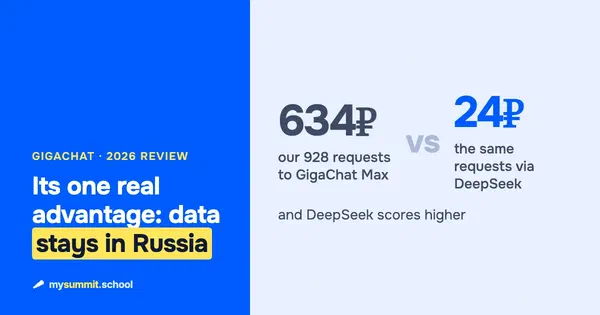
- DeepSeek V4 Flash on Yandex Cloud, the Russian cloud’s hosted version, costs 28–33x more than the original at slightly lower quality.
- Sber’s newest model, GigaChat 3.5 Ultra, has improved noticeably over GigaChat 2 Max, but its price has climbed to GPT-4 levels and it is still far from the leaders.
- Grok 4.5 rounds out the top 10 and remains one of the best at team management.
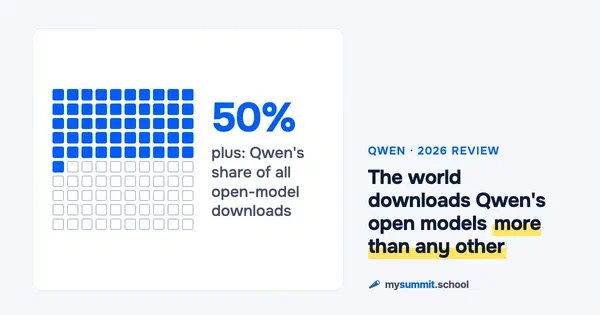
- Qwen has five models in the top 30. Qwen 3.6 Plus offers the best price-to-quality ratio.
Detailed results for each tool are in the updated series articles listed below.
What actually changed
Seven storylines cut across vendors. Keep them in mind before you open any table.
The cheap model is now often the best one
Gemini 3.8 Flash costs $0.75 per 1M input tokens and $3.75 per 1M output tokens – Google’s introductory price. On the Artificial Analysis index it scores 47 points, the same as Qwen3.8-Max at $2/$6 and five more than DeepSeek V4-Pro. On the LMArena text leaderboard it ranks eighth.
Two caveats change the math. The introductory price runs until December 31, 2026, and Google has not published the regular rate. And Google itself warns that the real cost per request comes out about 40% above list, because the model produces more output tokens and takes more agentic steps.
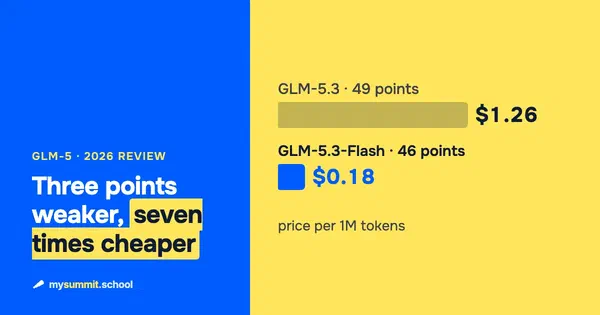
GLM-5.3-Flash costs $0.15/$0.50 against $1.40/$4.40 for the full GLM-5.3. On the Artificial Analysis index it trails by three points – 46 versus 49 – at a sevenfold difference in blended price. Z.ai also publishes its own comparisons with the previous generation: on DeepSWE v1.1 Flash scores 63.4 against 46.2, on AutomationBench 48.8 against 26.2. Three index points for a sevenfold saving is a trade you work out for a specific task, not one you take on faith.
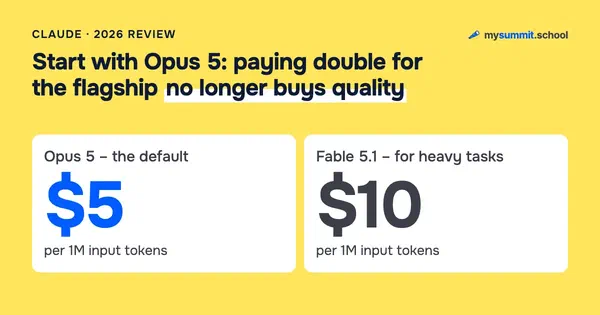
Anthropic has built its lineup on the same principle. Opus 5 at $5/$25, according to Anthropic, lands within 0.5% of Fable 5’s peak on CursorBench 3.2 at half the cost per task. Fable 5.1 at $10/$50 is an escalation path for genuinely hard problems, not the default mode.
In September 2026, buying the top-tier model by default is wrong more often than it is right.
Price thresholds reprice the whole request
GPT-6 Astra, per OpenAI’s price list: $10 input and $50 output per 1M tokens, as long as the input stays under 272K. Past that, the input rate doubles to $20 and output rises to $75 – and the entire request is repriced, not just the tokens over the line. One long document in context changes the price of the whole call.
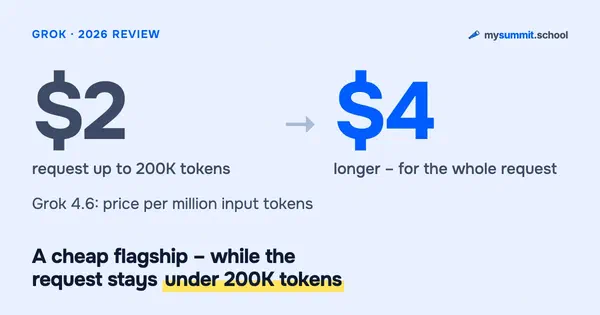
Grok 4.6 works the same way with a lower line, 200K: $2/$6 becomes $4/$12.
Since August 16, DeepSeek V4-Pro bills by peak and off-peak windows; the peaks are 01:00–04:00 and 06:00–10:00 UTC, and off-peak is half the price. At the same time, cache-hit rates rose by more than an order of magnitude over the original preview prices – by up to 1,100%, according to DeepSeek’s official changelog. Cheapest of all – yes. Aggressively cheap – no longer.
None of these mechanisms shows up on the pricing page the way finance will see it at the end of the month.
Speed is the variable nobody compares
Artificial Analysis measures output speed in tokens per second. Gemini 3.8 Flash does 334. The other nine models in the top ten range from 40 to 87; the slowest are Qwen3.8-Max and Kimi K3, at 40 and 42 respectively.
Latency never makes it onto the slide, yet everyone who waits more than a couple of seconds for an answer feels it. Wherever the model runs inside a user-facing interface – support, document review, an email draft – a fourfold speed gap matters more than three index points.
“Open weights” now means four different things
| What the label says | What it gives you | Examples from the September lineup |
|---|---|---|
| MIT | Use the weights however you like, no strings attached | GLM-5.3-Flash, GigaChat 3.5 Ultra, DeepSeek V4-Pro |
| Apache 2.0 | The same plus an explicit patent clause | Qwen3.8-27B, the entire Qwen 3.5 family |
| Custom license with a revenue threshold | Free below the threshold, a contract with the vendor above it | Qwen3.8-Max ($50M in revenue from AI services), Kimi K3 ($20M) |
| Closed weights | API or subscription only | OpenAI, Anthropic, Google, xAI, Yandex, Meta |
This column is more useful than any benchmark column. A model’s score gets recalculated in six weeks; vendors change license terms less often and announce it in advance.
A separate note on Qwen3.8-Max: Alibaba has promised to open a Max model for the first time, but the license, as far as is known, is a custom one, with revenue above $50M triggering negotiations. Check it before you put self-hosting into the plan.
Self-hosting is no longer a compromise
Qwen3.8-27B is a dense model with 27–28B parameters and a vision encoder, 262K context, Apache 2.0. Quantized to Q4_K_M it takes about 17 GB: it fits on a single consumer GPU like the RTX 4090, or on a 16 GB laptop via Ollama and llama.cpp.
GLM-5.3-Flash under MIT needs about 306 GiB in FP8 and NVIDIA Hopper or newer. That is mid-size to large company territory, but the license carries no conditions at all.
GigaChat 3.5 Ultra is a 432B MoE, also MIT. Qwen3.8-Max weighs around 2.5 TB in FP8 and remains a data-center option.
For a company with data-residency requirements, this is a genuinely new set of options: as recently as July, “keep it in-house” meant choosing a model that was clearly weaker than the cloud ones.
Vision arrived unevenly
According to its OpenRouter card, Qwen3.8-Max accepts text, images and video. The LMArena vision leaderboard puts qwen3.8-max third at 1300±8 – independent confirmation that the multimodality is real, contradicting a secondary source that had called the Max tier text-only.
GLM-5.3-Flash is the first natively multimodal model in the GLM-5 line: text, images, video, files.
How it came about is instructive. On June 29, Zhipu founder Jie Tang asked the community what the next GLM should include. Vision dominated the 1,400-plus replies – developers wanted to parse screenshots, PDFs, mockups and error messages without an intermediate model. GLM-5.3 shipped on August 14 without vision. Vision appeared twelve days later, in a different product line.
DeepSeek responded on August 21 with deepseek-v4-flash-vision-exp: images and screenshots, static or as frame sequences, but no true video; it is billed at V4-Flash rates and scores 64.3 on Chartography. The -exp suffix here means what it says – it is too early to build production on it.
Google went another way. Since September 1, 3.7 Flash, 3.6 Flash and 3.5 Flash-Lite support agentic video understanding: the model navigates a recording and pulls the transcripts, frames and audio it needs on demand instead of swallowing everything. On long recordings that means up to 88% fewer tokens – a direct budget line for anyone processing call recordings or training videos.
One rule applies when planning around these stories: rely only on what has already shipped.
Google has no top-tier model
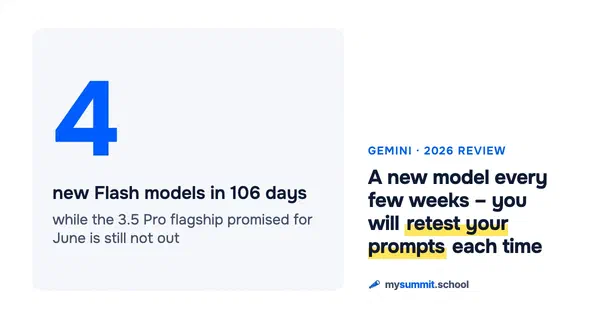
Four Flash releases in 106 days – 3.5 Flash-Lite, 3.6, 3.7 and 3.8 Flash, from late May to September 2. Sundar Pichai promised Gemini 3.5 Pro in June; today’s status is “coming soon.” According to the WSJ, the internal flagship candidates did not outperform Flash by enough to justify a release.
For procurement this means one thing: if you need a top-tier model, Google has nothing to sell you right now.
There is an operational side too. On July 21 Google deprecated temperature, top_p and top_k – changing the settings in the middle of a release stream. Prompts tuned for 3.6 Flash are not guaranteed to work on 3.8 Flash, and four model changes in 106 days are a separate line item for regression testing.
Independent leaderboards
Two platforms test everyone under the same conditions. When an article compares models, it should rely on them, not on numbers from launch announcements.
Artificial Analysis, data as of September 6, 2026
| Model | Vendor | Intelligence Index | Blended price, $/1M | Output, tok/s |
|---|---|---|---|---|
| Claude Fable 5.1 (max, w/ fallback) | Anthropic | 57 | $6.12 | 70 |
| GPT-6 Astra (max) | OpenAI | 55 | $2.57 | 71 |
| Claude Opus 5 (max) | Anthropic | 54 | $4.21 | 58 |
| Muse Spark 1.3 (max) | Meta | 53 | $0.96 | 190 |
| GPT-5.6 Sol (max) | OpenAI | 51 | $1.25 | 85 |
| Grok 4.6 (high) | xAI | 51 | $1.25 | 63 |
| Kimi K3 (max) | Moonshot | 50 | $1.58 | 42 |
| GLM-5.3 (max) | Z.ai | 49 | $1.26 | 87 |
| Gemini 3.8 Flash (high) | 47 | $0.74 | 334 | |
| Qwen3.8 Max | Alibaba | 47 | $1.19 | 40 |
| Qwen3.8-Flash-Next | Alibaba | 46 | – | – |
| GLM-5.3-Flash | Z.ai | 46 | $0.18 | 48 |
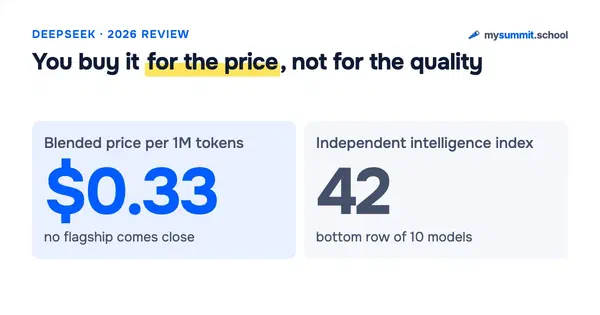
| DeepSeek V4 Pro 0813 (max) | DeepSeek | 42 | $0.33 | 71 |
One caveat you cannot skip: Artificial Analysis publishes its index in versions and rescales it between them. The “60” in Z.ai’s announcement and the “49” on the live board are the same model on different scales. Comparisons only hold within a single snapshot.
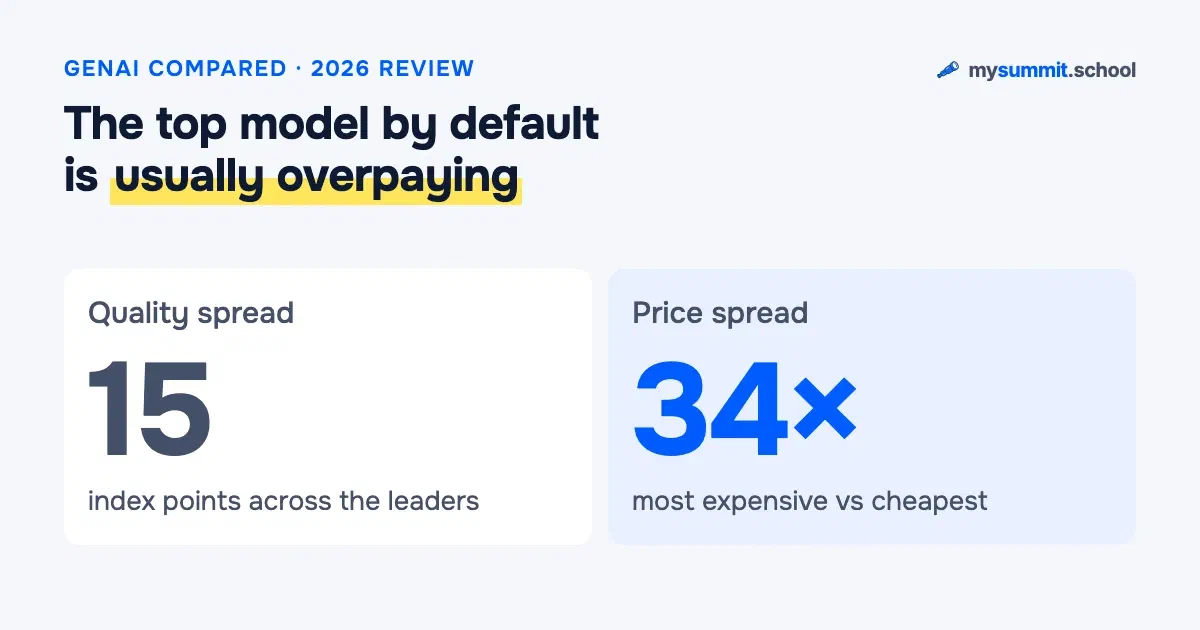
The gap between first and last place in the table is 15 points. The price gap is 34x – $6.12 against $0.18. The real decision sits between those two numbers: how much fifteen index points are worth against a thirtyfold premium on your specific tasks.
LMArena, data as of September 6, 2026
Text, top ten:
| # | Model | Rating |
|---|---|---|
| 1 | claude-fable-5 (Anthropic) | 1507±5 |
| 2 | claude-opus-4-6-high | 1505±4 |
| 3 | claude-fable-5.1-max | 1504±11 |
| 4 | claude-opus-4-7-high | 1502±4 |
| 5 | muse-spark-1.2 xHigh (Meta) | 1499±10 |
| 6 | claude-opus-4-6 | 1498±3 |
| 7 | claude-opus-4-7 | 1494±4 |
| 8 | gemini-3.8-flash-high (Google) | 1494±9 |
| 9 | claude-opus-5-high | 1493±5 |
| 10 | muse-spark-1.1 (Meta) | 1492±5 |
Vision, top ten:
| # | Model | Rating |
|---|---|---|
| 1 | claude-fable-5 | 1313±8 |
| 2 | claude-opus-4-7-high | 1301±7 |
| 3 | qwen3.8-max (Alibaba) | 1300±8 |
| 4 | claude-opus-4-7 | 1299±7 |
| 5 | claude-opus-4-6-high | 1299±7 |
| 6 | muse-spark (Meta) | 1294±9 |
| 7 | claude-opus-4-6 | 1293±7 |
| 8 | muse-spark-1.2 xHigh (Meta) | 1292±15 |
| 9 | claude-opus-5-high | 1290±8 |
| 10 | gemini-3-pro (Google) | 1289±8 |
The figures in these two tables come from LMArena and have nothing to do with our benchmark.
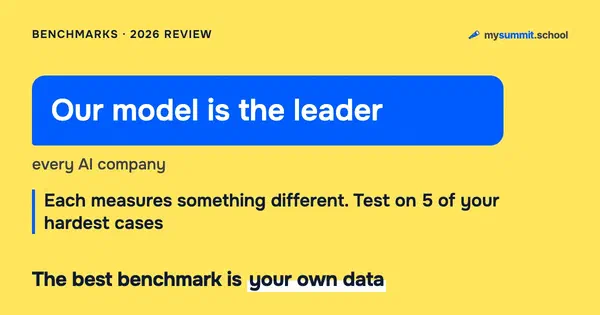
The confidence intervals for positions one through nine overlap on both boards. Statistically that is a tie, and any text that names a best model on the strength of LMArena reads more into the board than it supports. We covered this mechanism in detail in “AI benchmarks are losing their meaning”; for how the measurement itself works, see “How LLM quality is evaluated”.
The two boards diverge in a telling way. Anthropic holds six of the ten spots on human preference and still sits mid-table on Artificial Analysis. One board grades answers against a rubric; the other asks people which text they prefer to read. These are different quantities, and confusing them is a common mistake when choosing a model.
Meta’s muse-spark family stays in the top ten on both boards, and Muse Spark 1.3 is fourth on Artificial Analysis at $0.96 and 190 tokens per second – twice as fast as everything ranked above it. We break down the lineup in a separate part of the series.
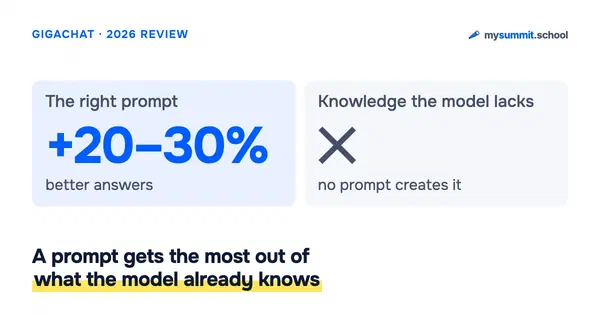
So far this has been about how to measure models. And measurement is messy: our benchmark describes the July lineup, Artificial Analysis rescales between versions, and on LMArena the top nine are indistinguishable. The manager’s job does not change because of that – they need an answer they can put in a report or hand to a client. The same model, given two different framings of a task, produces either a draft you have to rewrite or a result you don’t. The difference between “works” and “works reliably” is the skill of framing tasks for AI.
Summary table: 13 tools compared
The third column is the model from our July run, not the current flagship: we have not yet tested anything released after July 16. Ranks and scores are in the live “Price and result” table below, which updates with every benchmark wave.
| Tool | Flagship as of September 6, 2026 | Model in our benchmark | Context | Subscription | Strength |
|---|---|---|---|---|---|
| ChatGPT | GPT-6 Astra | GPT-5.6 Sol | 1M tokens on Astra | $20–200/mo | Versatility, ecosystem, computer use |
| Claude | Fable 5.1; workhorse – Opus 5 | Opus 4.6 | 1M tokens | $20–200/mo | Writing quality, planning, browser and Cowork |
| Gemini | 3.8 Flash; no top-tier model | 3.1 Pro | 2M tokens on 3.1 Pro | $20–250/mo | Google Workspace, output speed |
| Perplexity | Multi-model | not tested | Varies | $20/mo | Search with sources |
| Grok | 4.6 | 4.5 | 500K tokens | $8–35/mo | Team management, conflict scripts |
| YandexGPT | Alice AI, YandexGPT 5.1 Pro | Alice AI v3 | 128K tokens | API-based | Russian language, Yandex 360 |
| GigaChat | 3.5 Ultra | 3.5 Ultra | – | API-based | Data stored in Russia, MIT open weights |
| DeepSeek | V4-Pro (GA) | V4-Pro | 1M tokens | API-based | Price, output ceiling of almost 400K tokens |
| Qwen | Qwen3.8-Max | 3.6 Plus | 1M tokens on Qwen3.8-Max | API-based | 5 models in the top 30, open weights |
| GLM-5 by Z.ai | GLM-5.3 and GLM-5.3-Flash | GLM-5.2 | 1M tokens | API-based | MIT weights on Flash, multimodality |
| Kimi | K3 | K3 | 1M tokens | $19–199/mo | Strongest non-US model in our benchmark |
| MiMo (Xiaomi) | v2.5 Pro | v2.5 Pro | – | API-based | Top 10 at a fraction of Western prices |
| MiniMax | M3 | M3 | – | API-based | Top 10 at a low price |
Meta’s muse-spark family is not in this table because it is not in our benchmark. See the Muse Spark lineup review; the independent leaderboard data is above.
Prices of the September releases
Figures come from vendor price lists; these models are not in our benchmark.
| Model | Input, $/1M | Output, $/1M | What to know |
|---|---|---|---|
| GPT-6 Astra | $10 | $50 | Above 272K input tokens – $20 and $75 for the whole request |
| Claude Fable 5.1 | $10 | $50 | Cache reads $0.25, 75% cheaper than Fable 5 |
| Claude Opus 5 | $5 | $25 | Half the price of Fable 5.1 |
| Grok 4.6 | $2 | $6 | Above 200K – $4 and $12 |
| Gemini 3.8 Flash | $0.75 | $3.75 | Introductory price until December 31, 2026; regular rate not announced |
| Qwen3.8-Max | $2 | $6 | Cache reads $0.25 |
| Qwen3.8-Flash-Next | $0.16 | $0.47 | Preview of the Qwen4 architecture, context up to 1M via YaRN |
| GLM-5.3 | $1.40 | $4.40 | Price unchanged from the previous generation |
| GLM-5.3-Flash | $0.15 | $0.50 | Promo until September 9 – $0.075/$0.25 |
OpenAI’s Batch and Flex tiers cost half as much; priority mode costs twice as much for twice the speed. GPT-6 Astra has one more access quirk: it is the first model to cross the critical cybersecurity threshold in OpenAI’s Preparedness Framework. The standard API refuses vulnerability-hunting tasks, full access goes only to the Trusted Access and Daybreak programs, and regular users, OpenAI warns, may run into slowdowns and blocks.
Cost comparison
| # | Model | Score | Price /1M (in/out) | Per test | From Russia |
|---|---|---|---|---|---|
| 16 | Kimi K3 | 7.4 | $3.00/$15.00 | $0.219 | no VPN |
| 3 | GPT-5.6 Sol | 8.0 | $5.00/$30.00 | $0.190 | VPN needed |
| 26 | Claude Opus 4.6 | 6.8 | $5.00/$25.00 | $0.216 | VPN needed |
| 41 | MiniMax M3 | 6.2 | $0.30/$1.20 | $0.010 | no VPN |
| 39 | MiMo v2.5 Pro | 6.2 | $1.00/$3.00 | $0.027 | no VPN |
| 24 | Grok 4.5 | 6.9 | $2.00/$6.00 | $0.028 | VPN needed |
| 40 | Kimi K2.6 | 6.2 | $0.74/$3.49 | $0.036 | no VPN |
| 44 | Qwen 3.6 Plus | 6.1 | $0.33/$1.95 | $0.011 | no VPN |
| 45 | DeepSeek V4 Pro | 6.0 | $0.43/$0.87 | $0.005 | no VPN |
| 58 | DeepSeek V4 Flash | 5.6 | $0.09/$0.18 | $0.001 | no VPN |
| 56 | DeepSeek V4 Flash (Yandex Cloud) | 5.6 | $3.00/$5.00 | $0.023 | no VPN |
| 71 | GigaChat 3.5 Ultra | 5.1 | $1.07/$3.21 | $0.011 | no VPN |
| 65 | Alice AI LLM (v3) | 5.4 | $4.10/$9.84 | $0.020 | no VPN |
| 74 | GigaChat 2 Max | 4.5 | $7.22/$7.22 | $0.013 | no VPN |
| 46 | Gemini 3.1 Pro | 6.0 | $2.00/$12.00 | $0.027 | VPN needed |
Models in the benchmark: 74, data as of 2026-11-20 · Full ranking →
Free tiers the table does not show: unlimited chat on Kimi, full free access on Qwen and DeepSeek, a web interface on GigaChat, Alice and Yandex Browser for Alice AI, and Grok through an X Premium subscription.
Test cost is the average cost of one benchmark scenario (system prompt + task + model answer, on average about 2,000 input tokens and 1,500 output tokens). See the full benchmark methodology.
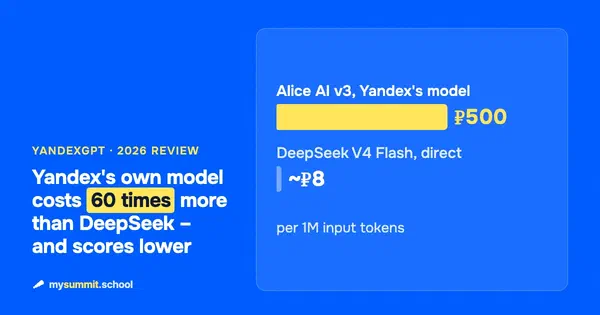
DeepSeek V4 Flash on Yandex Cloud costs 23x more than the original at slightly lower quality – see the “Test cost” column above. What you pay for is data residency in Russia and Yandex’s SLA.
Which tool to choose: 7 scenarios
1. An all-round assistant for everyday work
ChatGPT has the broadest ecosystem: text generation, images, data analysis, file handling, integrations through the GPT Store. With GPT-6 Astra the bet has shifted to computer use: a context of just over 1M tokens, text and image input, text-only output, and no audio input. Anthropic offers a clearer choice within its lineup: Opus 5 at $5/$25 for most tasks, Fable 5.1 at $10/$50 for the hard ones, and always-on adaptive thinking that no longer needs to be toggled by hand.
In September, Anthropic’s product news is more interesting than its model news. Claude in Chrome is now generally available on all paid plans, Cowork got a built-in browser, and memory now carries across chat and Cowork. For enterprise rollout there is one detail to settle up front: on the Team and Enterprise plans, memory is off by default.
2. Research and fact-checking
A tool that searches the web and shows links to its sources. Deep Research mode handles complex questions.
3. Working in the Google ecosystem
If your company runs on Google Workspace, Gemini is built into Gmail, Docs, Sheets and Drive. 3.8 Flash has been added to the Gemini app on the Pro and Ultra plans, to AI Mode in Search and to Google Sheets. The 2M-token context window belongs to Gemini 3.1 Pro – that is the model that lets you analyze huge documents.
Two things to factor into procurement. Google currently has no top-tier model, so if a task demands the maximum, there is nothing to pick. And the 3.8 Flash introductory price runs until December 31, 2026, with no regular rate published – budgeting on the introductory $0.75 is risky.
4. Russian-language work and Russian data residency
This scenario matters if you operate in Russia or work with Russian-language content: GigaChat (Sber) and YandexGPT are the two main domestic models there, and both store data in Russia. GigaChat 3.5 Ultra is the best Russian model in our July benchmark, although no model handles employment law reliably (Western ones included). YandexGPT is integrated with the Yandex ecosystem (Yandex 360, Browser, Alice). An alternative is DeepSeek V4 Flash on Yandex Cloud: in the July run it outperforms Alice AI and keeps data in Russia, but costs 28–33x more than the original.
Two things changed over the summer. Sber released GigaChat 3.5 Ultra under MIT – a 432B MoE on linear attention, almost half the size of the previous flagship and up to four times faster on long texts. By our July measurements it is far from the leaders, but the option to run it in-house changes the calculation. Yandex relaunched Alice on the new closed-weights Alice AI LLM and updated YandexGPT 5.1 Pro. According to Yandex, the share of good answers rose from 60% to 71% and hallucinations halved, to 16%. The price fell threefold. Since July 16, the entire Alice AI lineup – LLM, ART and VLM – has been certified to ISO/IEC 42001.
5. Minimal budget
DeepSeek V4 Flash costs 130x less than Gemini 3.1 Pro at higher quality. Qwen 3.7 Plus is “planning for almost free.” Per-test prices are in the live table above.
Two releases have joined them that are not in our benchmark. Qwen3.8-Flash-Next is an open preview of the Qwen4 architecture: 125B parameters, 6B of them active per token. The 262K context extends to 1M via YaRN, and the price is about $0.16/$0.47. A 51B n-gram embedding layer lives in regular RAM instead of GPU memory. According to Alibaba, it beats DeepSeek-V4-Flash and Claude Opus 4.6 on most of the tasks tested. GLM-5.3-Flash at $0.15/$0.50 adds multimodality and MIT on top of that.
One caveat about DeepSeek: higher prices, peak windows and a pricier cache mean “aggressively cheap” is over. Cheap is still here.
6. Data privacy
Qwen – and now that is a real answer.
Qwen3.8-27B: Apache 2.0, a vision encoder, native image and video, 262K context, about 17 GB in Q4_K_M. One consumer GPU or a 16 GB laptop via Ollama and llama.cpp. As recently as July this slot was held by previous-generation open models – usable, but clearly weaker than the cloud ones; now it is a model you can comfortably hand to your team.
There are two bigger options next to it. GLM-5.3-Flash under MIT, about 306 GiB in FP8, NVIDIA Hopper or newer – the only multimodal model at this level that you can legally deploy on your own hardware with no license conditions. And GigaChat 3.5 Ultra under MIT, if you need a model developed under Russian jurisdiction.
Qwen3.8-Max is formally promised as open weights too, but in practice that means about 2.5 TB in FP8, a data center and a license with a revenue threshold. For most companies it is not a self-hosting option.
7. Media content creation
ChatGPT plus specialized tools.
GPT-6 Astra neither accepts audio nor generates images on its own – image generation is plugged in as a tool. Over the summer a separate layer grew up around the flagships: Gemini Omni Flash generates and edits video from 360p to 4K, Lyria 3.5 writes full-length tracks, Gemini 3.5 Transcribe recognizes speech in more than 85 languages, separates speakers and adds precise word timestamps, and grok-imagine-video-1.5 outputs native 1080p.
A detailed review of AI tools for creating images, video, music and presentations is in a separate article in the series.
How to compare models objectively
Marketing claims are not the best selection criterion. Use independent benchmarks:
- mysummit.school benchmark – 47 models on real management tasks, two independent judge models
- Artificial Analysis – a single scale for intelligence, blended price and output speed; remember the rescaling between index versions
- LMArena – anonymous blind comparison of models by real people; the top nine positions overlap within their intervals
- SWE-bench – for evaluating a model’s agentic capabilities
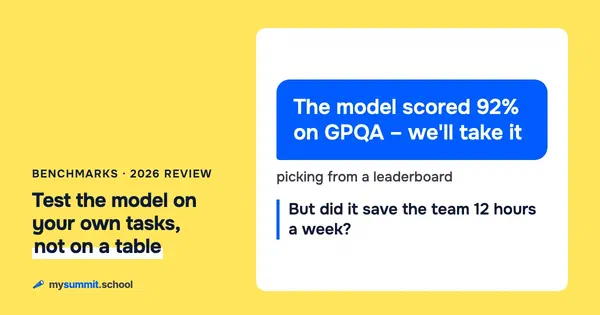
Better still, test two or three finalists on your own real work tasks.
Practical tip: the “primary + backup” strategy
Don’t tie yourself to a single tool. The best setup:
- Primary tool – for 80% of daily tasks (ChatGPT, Claude or Gemini). By our benchmark: Claude Opus 4.6 or Grok 4.5, and at a fraction of the price, Kimi K3 and MiMo v2.5 Pro.
- Backup – for when the primary fails or is unavailable. DeepSeek V4 Flash and Qwen 3.7 Plus are free.
- Specialist – for specific tasks: Perplexity for research, GigaChat 3.5 Ultra for data that must stay in Russia, Qwen for confidential data on your own server.
This approach gives you a safety margin and lets you use each tool’s strengths.
Mapped onto the September lineup, the same logic looks like this: GPT-6 Astra or Claude Fable 5.1 as the primary tool, Claude Opus 5 as the workhorse at half the price, and GLM-5.3-Flash or Qwen3.8-Flash-Next as a backup you can also host yourself. Gemini 3.8 Flash deserves its own line – for tasks where response speed matters more than the last three points of quality.
The table at the top of this article went stale in six weeks, and the next one will age about as fast: Google promises Gemini 3.5 Pro, xAI is training Grok 5, and Z.ai is holding the GLM-5.3 weights for a post-release safety review. Scores change fastest in tables like these. The license column changes slowest, and in September 2026 it is the one to read first: MIT on GLM-5.3-Flash and Apache 2.0 on Qwen3.8-27B will outlast both the next release and the next rescaling.
Other parts of this series
 Part 1
ChatGPT in 2026: What Changed and Where Managers Should Start
 Part 2
Claude by Anthropic in 2026: Opus 5, Fable 5.1, Mythos 5.1, Cowork and Chrome – a Manager's Guide
 Part 3
Perplexity AI in 2026: A Manager's Guide to the Smart Answer Engine
 Part 4
Google Gemini in 2026: Models, NotebookLM and Workspace Integration
 Part 5
Grok by SpaceXAI in 2026: A Review of Elon Musk's AI
 Part 6
YandexGPT in 2026: A Review of Russia's AI Platform for Business
 Part 7
DeepSeek in 2026: V4-Pro and V4-Flash Reviewed After the Price Hike
 Part 8
GigaChat in 2026: Honest Review – Is It Worth Using for Work?
 Part 9
Qwen by Alibaba in 2026: Open Weights Are Back at the Top
 Part 10
LLM Benchmarks Explained: MMLU, Chatbot Arena & SWE-bench Leaderboard (2026)
 Part 11
AI for Media Creation in 2026: Images, Video, Music and Presentations
 Part 13
Chat Z.AI (GLM-5) in 2026: The Chinese Model That Pretends to Be Claude
 Part 14
Kimi by Moonshot in 2026: K3, K2.6, K2.7-Code and Agents for Managers
 Part 15
GigaChat at Work: Getting the Most Out of Russia's Sovereign AI
 Part 16
AI Benchmarks Are Losing Their Meaning – So How Do You Pick a Model?
 Part 17
Meta Muse Spark: Meta's First Closed Model Since 2023
 Part 18
Microsoft MAI Models in 2026: What You Can Actually Use, and What It Costs
 Part 19
Coding Agents in 2026: Two Form Factors – Terminal and Desktop
All reviews in the series
- ChatGPT by OpenAI – a universal ecosystem and computer use
- Claude by Anthropic – best writing quality and safety
- Perplexity AI – a next-generation search engine
- Gemini by Google – Workspace integration and four Flash releases in 106 days
- Grok by xAI – Elon Musk’s AI with X integration
- YandexGPT – Russian AI with the Yandex ecosystem
- DeepSeek – the Chinese model with aggressive pricing
- GigaChat by Sber – Russian AI for business
- Qwen by Alibaba – the price floor and open weights
- How LLM quality is evaluated – benchmarks for managers
- AI for media content creation – images, video, music
- GLM-5 by Z.ai – a Chinese model with open weights and multimodality

18 years leading engineering teams. Founder of mysummit.school. 700+ graduates at Yandex Practicum and Stratoplan.