DeepSeek in 2026: V4-Pro and V4-Flash Reviewed After the Price Hike
AI models in this article
DeepSeek (often misspelled “Deep Seek”) is a Chinese AI startup that took two years to become one of the industry’s front-runners. It shipped V4 in April 2026. On 13 August V4-Pro came out of beta, and on 16 August the company rewrote its pricing.
The previous version of this review called DeepSeek the budget flagship and promised prices 10–50 times below the competition. The first claim still holds. The second needs redoing: DeepSeek raised its rates, introduced peak-hour windows, and pushed the price of a cache hit up by as much as 1,100% over the first preview pricing. The company frames this as becoming a sustainable compute provider. Whatever the reason, a budget built on spring prices no longer adds up.
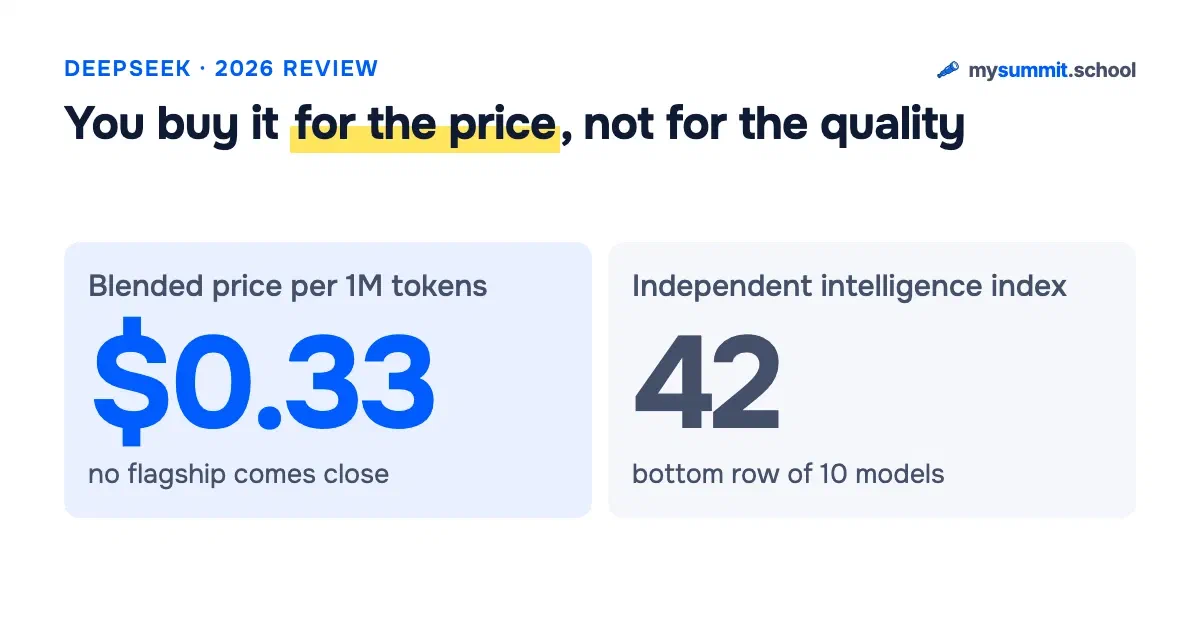
For a manager, DeepSeek is still mostly about price. At a blended $0.33 per million tokens, no other flagship in the Artificial Analysis table comes close. But the price is no longer aggressive, and that changes the nature of the decision: picking DeepSeek “because it’s the cheapest” now has to be a deliberate choice, made with a clear idea of what you are actually buying.
All models ship under the MIT licence, so you can download them and run them on your own servers. Note that the public endpoint runs on FP4 quantization: answers from the API and from a self-hosted model built from the full weights are not guaranteed to match.
What Makes DeepSeek Different?
V4-Pro is a mixture-of-experts model with 1.6 trillion parameters, of which 49 billion are active on any given token. You pay for the active part, so a flagship-sized model still costs little per request. Hybrid attention and KV-cache compression keep long-context work cheap.
- A context window of 1,048,576 tokens – roughly 750,000 words, or about 2,500 pages of text.
- An output cap of 393,216 tokens, the largest of any model in this comparison.
- Three reasoning-effort levels. DeepSeek’s own API calls them low, high and max; on OpenRouter the same model exposes high and xhigh. If you are building an integration, check the mode names for each provider – they don’t line up.
DeepSeek’s Main Models (September 2026)
DeepSeek V4-Pro
 DeepSeek V4 ProFollows clear tasks
score 6.0/10 rank 45 of 74 $0.005 per task no VPN
Tested in the mysummit.school benchmark: May 2026About the model →Compare →
The flagship, generally available in the app, on the web and via the API since 13 August 2026. A general-purpose assistant for writing, analysis, code and data work. It is still text-only: the Pro model card lists no image, audio or video input.
The vendor’s own numbers from the same release report: Terminal Bench 2.1 – 87.9, HLE with tools – 60.0, DSBench-FullStack – 71.1. For the V4-Pro-Max variant DeepSeek claims LiveCodeBench 93.5 and SWE-bench Verified 80.6, plus a Codeforces rating of 3,206 and 83.5 on MRCR at one million tokens. These are DeepSeek’s own scores; the independent picture below is more modest.
- 1,000,000 tokens of input context, up to 393,216 tokens of output
- Tools, tool_choice, structured JSON output
- MIT-licensed weights; the public endpoint runs FP4
The output cap deserves its own paragraph. 393,216 tokens is around 295,000 words – a large company’s annual report in a single pass. Every other model in this comparison caps out several times lower, and for anyone generating long documents that is the one spec no intelligence score can make up for.
DeepSeek V4-Flash
DeepSeek V4 FlashFollows clear tasks
score 5.6/10 rank 58 of 74 $0.001 per task no VPN
Tested in the mysummit.school benchmark: May 2026About the model →Compare →
The fast, cheap model, with 284 billion parameters. Its official public-beta release landed on 31 July 2026, and DeepSeek led with agentic capabilities and Responses API support for Codex. The vendor reports 82.7 on Terminal Bench 2.1.
Same million-token context, same reasoning modes. It is built for high-volume work: chatbots, document processing, bulk requests.
One thing to keep in mind: Qwen3.8-Flash-Next beats V4-Flash on most of the tasks tested, with noticeably fewer active parameters. Over the summer V4-Flash stopped being the strongest model in its class.
Vision: deepseek-v4-flash-vision-exp
On 21 August 2026 DeepSeek released its first model that accepts images. You call it as model='deepseek-v4-flash-vision-exp', and it is billed at V4-Flash rates.
The stated use cases are UI automation and chart reading. It takes static images and sequences of screenshots; it does not process real video. DeepSeek reports 64.3 on Chartography and claims its multimodal agentic abilities are approaching Opus 4.8. Both figures are the vendor’s own.
The model isn’t in our benchmark yet, and there are no independent evaluations of it either – only DeepSeek’s data.
The -exp suffix means what it says. This is a preview: don’t build a production process on it, because behaviour or pricing can change at any time. Note also that vision arrived on the cheap tier – the flagship is still text-only.
Image generation still lives in the separate Janus-Pro-7B line: 80% on GenEval versus 67% for DALL-E 3, with output limited to 384×384 px.
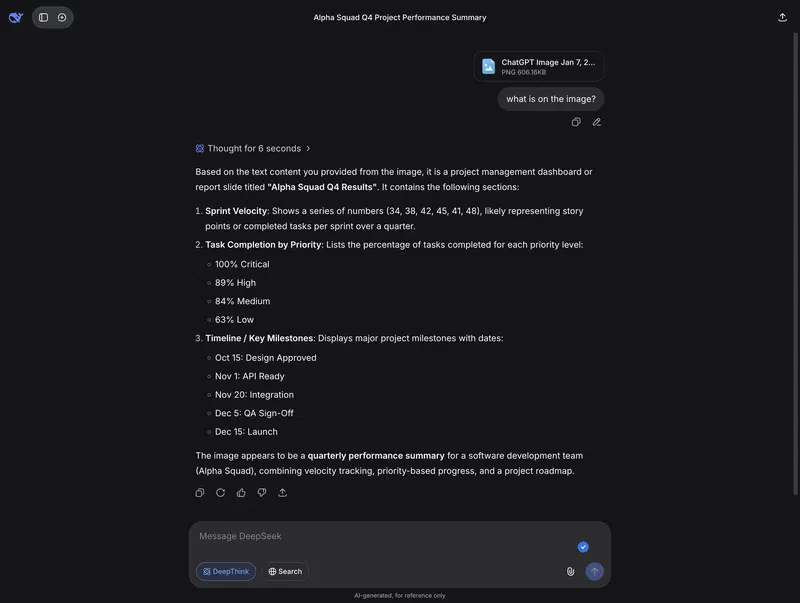
Prompting DeepSeek looks simple: upload a document, ask for a conclusion. The hard part starts when you need a precise answer – numbers that reconcile, risks that don’t get lost on page two. The gap between “the model answered” and “the model is usable” is the skill of framing the task.
How It Stacks Up Against the Competition
What the independent leaderboards say
Here is the September snapshot from Artificial Analysis for ten leading models. Intelligence Index, blended price per million tokens and output speed – all measured with one methodology, which is what makes the table useful.
| Model | Vendor | Intelligence Index | Blended price, $/1M | Output, tokens/s |
|---|---|---|---|---|
| Claude Fable 5.1 (max) | Anthropic | 57 | $6.12 | 70 |
| GPT-6 Astra (max) | OpenAI | 55 | $2.57 | 71 |
| Claude Opus 5 (max) | Anthropic | 54 | $4.21 | 58 |
| Grok 4.6 (high) | xAI | 51 | $1.25 | 63 |
| Kimi K3 (max) | Moonshot | 50 | $1.58 | 42 |
| GLM-5.3 (max) | Z.ai | 49 | $1.26 | 87 |
| Gemini 3.8 Flash (high) | 47 | $0.74 | 334 | |
| Qwen3.8-Max | Alibaba | 47 | $1.19 | 40 |
| GLM-5.3-Flash | Z.ai | 46 | $0.18 | 48 |
| DeepSeek V4-Pro 0813 (max) | DeepSeek | 42 | $0.33 | 71 |
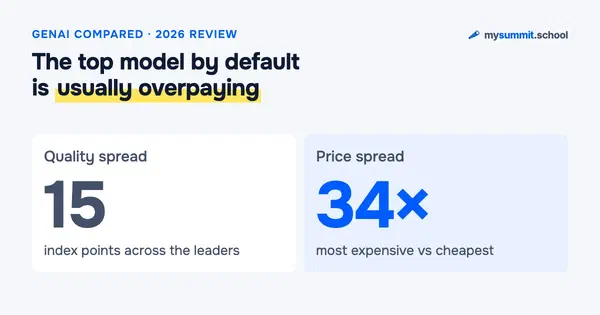
DeepSeek V4-Pro comes last on intelligence in this table; the only cheaper model is GLM-5.3-Flash, which belongs to a different class. The top and bottom rows are 15 index points apart, and the most expensive price in the snapshot is 34 times the cheapest. That is DeepSeek’s honest position as of September 2026: you buy it for the price.
A caveat about the scale itself. Artificial Analysis publishes its index in versions and rescales it between them, so the “60” in a vendor’s launch post and the “42” in the current snapshot come from different coordinate systems. Comparisons only make sense within a single snapshot. For how this kind of measurement works in the first place, see How LLM Benchmarks Work in 2026.
LMArena gives a second view: DeepSeek doesn’t make the top ten for either text or vision. The confidence intervals of the nine highest rows on the text leaderboard overlap – positions one through nine are statistically indistinguishable. Any “model X is the best” claim drawn from it reads more into the ranking than it measures, which is exactly the argument this series made in AI Benchmarks Are Losing Their Meaning.
The Chinese neighbours
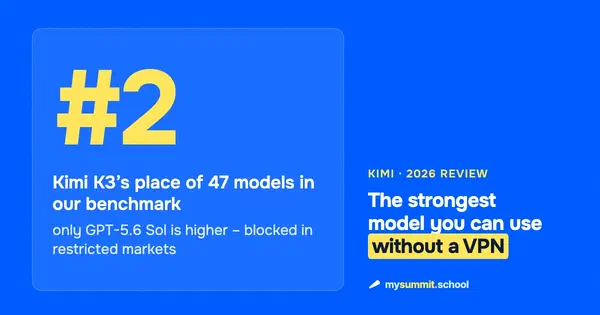
Kimi K3 is DeepSeek’s main Chinese rival on agentic work. In the Artificial Analysis snapshot it scores 50 index points at a blended $1.58 – roughly five times the price of V4-Pro for eight points more. K3 isn’t in our own benchmark yet, so the figures here come from the independent leaderboard.
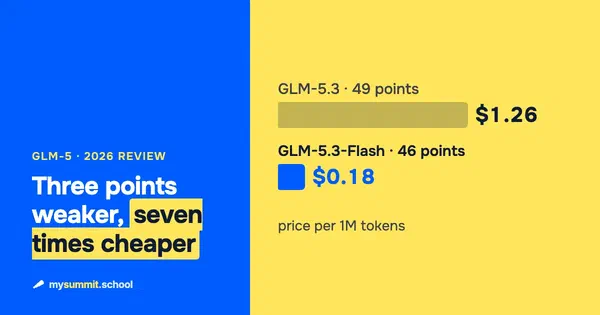
The row in that table that should worry DeepSeek most is GLM-5.3-Flash: 46 index points at a blended $0.18. That is four points above V4-Pro at almost half the price. “Let’s go with DeepSeek because it’s cheaper than the other Chinese models” no longer holds by default.
Where V4-Pro is stronger
- A 393,216-token output cap, the highest in the comparison. Nothing else in this table comes close for generating long documents.
- Long context at a sensible price: a million tokens of input at around $0.435 per million on direct off-peak access.
- Coding, per the vendor: LiveCodeBench 93.5 and SWE-bench Verified 80.6 for V4-Pro-Max.
- MIT-licensed weights: you can bring the model inside your own perimeter, which you can’t do with the closed flagships at the top of the table.
Where V4-Pro falls short
- Independent quality scores. 42 points on Artificial Analysis is the bottom row among the ten models in this snapshot.
- The gap between vendor figures and independent testing. DeepSeek claims 87.9 on Terminal Bench 2.1 and 60.0 on HLE with tools, while the independent index puts the model at the bottom of the list. Both numbers are honest – they simply answer different questions.
- Multimodality. The flagship has none at all, and on Flash it is a preview. Claude, GPT and Gemini have image analysis built into the main model.
- Communication. In our data, one of the weakest results among top models on tasks that involve writing feedback.
That said, swapping the model isn’t the only way to close the gap on agentic tasks. In August 2026 the StateM study lifted DeepSeek-V4 Flash from 82.7% to 88.1% on Terminal-Bench 2.1 without touching the weights – purely through the scaffolding around the model: runbooks, persistent state and step verification. What exactly was done and why it matters for cheaper open models is covered in our breakdown of recent prompt-engineering benchmarks (in Russian).
Knowing which model is cheaper is useful. Being able to explain why the cheap model is good enough for one of your tasks and not for the one next to it is more useful still.
How a Manager Can Use It
- Translating tech-speak into plain English – condensing a dense technical report into a short memo for leadership.
- Stress-testing a decision (max mode) – upload a business plan and ask for its weak spots. The highest reasoning level surfaces risks that aren’t obvious.
- Data analysis – describe in plain words what you want to learn from an Excel sheet, and DeepSeek will write the formulas or a script.
- Working with large documents – upload a policy manual or an annual report (up to ~2,500 pages) and ask questions. A million-token context holds entire codebases or corporate knowledge bases.
- Long documents as output – the 393,216-token cap lets you ask for a coherent text hundreds of pages long in one request, without stitching pieces together.
- Speeding up the IT team – writing code, reviews, tests and documentation.
Try It Yourself: Analysing a Risky Decision
Below is a management case with problems that aren’t obvious at first glance. Click “Run” and compare how V4-Pro, V4-Flash and Kimi K3 handle the risk hunt. Pay attention to the depth of the reasoning and how specific the recommendations are.
You
You are an experienced business analyst. Find the hidden risks in the following decision.

## Decision
A chain of 40 coffee shops in London plans to convert every location to fully automated coffee preparation (robot baristas) within 3 months. Budget: £10M. Expected payroll savings: £650K/month. Payback period: 15 months. A pilot at 2 locations showed a 40% increase in service speed.

## Context
- 340 baristas face redundancy
- Leases on 60% of locations expire in 18 months
- Average ticket: £4.80; 70% of revenue comes from the morning rush (7:00–9:30)
- Current customer NPS: 72

## Task
1. Find 3–5 risks the authors of the decision may have missed
2. For each: probability (high/medium/low) and potential damage
3. Specific actions to mitigate each risk
4. Which assumptions are not backed by data?
5. Final recommendation: approve, rework or reject
What to look for in the answers:
- V4-Pro at the maximum reasoning level builds a chain of analysis and is more likely to spot non-obvious links (expiring leases + layoffs = reputational risk; a 2-location pilot says little about 40)
- V4-Flash answers faster and cheaper, but more often misses how the risks connect
- Kimi K3 usually structures its answer in more detail, but can be verbose
Update: Our Benchmark, New Prices and Resellers (September 2026)
Our benchmark of management tasks (42 models, 80 scenarios) tested DeepSeek V4 at spring prices. The quality results still stand; the cost figures don’t.
DeepSeek V4-Pro
- Information search5.8
- Data analysis6.3
- Decisions under uncertainty6.6
- Feedback analysis6.5
- Corporate requirements and risks5.8
- Automation5.5
- People management6.5
- Russia and Kazakhstan specifics5.0
Pricing is all over the place right now, and it’s better to show the whole picture than pick one convenient number. Direct from DeepSeek, off-peak, you pay about $0.435 per million input tokens and $0.87 per million output, with cache hits around $0.0036. OpenRouter’s blended rate across 16–17 providers is about $0.69 and $1.37, with cache reads at $0.057. The spread comes partly from peak pricing and partly from each provider adding its own margin. For your budget, use the channel your traffic will actually go through.
Where the model fits, based on our scenarios: process rollout plans, scripts for difficult team conversations, high-volume routine correspondence. Where it consistently lets you down: ROI and financial models with calculation errors, legal reasoning, SaaS pricing analysis.
DeepSeek V4-Flash
$0.09/$0.18 per million tokens off-peak is the model’s latest published price, and it doubles during peak windows. In our benchmark Flash ranked above Gemini 3.1 Pro at a price two orders of magnitude lower. A solid workhorse for writing and planning, provided you can spread your request schedule across the pricing windows.
Good for: weekly reports, classifying feedback, quarterly plans and risk matrices. Not good for: budgets and financial models, international law and GDPR, automation code.
Buying through a reseller: the Yandex Cloud case
Resellers add a layer of their own pricing on top of DeepSeek’s. Yandex Cloud, Russia’s largest cloud provider, sells DeepSeek V4 Flash through its own API. DeepSeek V4 Flash (Yandex Cloud) is the very same model at a flat price – and since the August changes, how big the markup is depends on the time of day.
| DeepSeek direct, off-peak | DeepSeek direct, peak | Yandex Cloud | |
|---|---|---|---|
| Input per 1M | $0.09 | $0.18 | $3.00 |
| Output per 1M | $0.18 | $0.36 | $5.00 |
| Reseller markup | ×33 input, ×28 output | ×17 input, ×14 output | – |
In the spring version of this article the markup here was 28–33×. It hasn’t gone anywhere; it just isn’t the only number anymore – peak windows halve the gap.
What the markup buys is local to Russia: access without a VPN, an SLA from Yandex, data stored in-country, a million-token context window. For a team elsewhere none of that applies, but the lesson travels: a flat reseller price can be worth it when you need its contract, SLA or data residency, and the premium shrinks if your traffic would otherwise land in peak windows. If neither matters and you can move traffic off-peak, going direct is dozens of times cheaper – and, in our benchmark, slightly more accurate too.
Previous generations
DeepSeek V3.2 (tested earlier) – a solid upper-mid tier performer, especially strong at planning and problem-solving. Its serious gap is communication: one of the weakest results among all the models we tested.
DeepSeek R1 – a comparable level overall. Its strengths are research and analytics, where step-by-step reasoning gives it a clear edge.
For a category-by-category breakdown, see our guide to the best AI models for managers.
Limitations and Risks
- Multimodality is still a preview – the V4-Pro flagship is text-only; image input arrived on 21 August, only on the Flash tier and with an
-expsuffix. The model doesn’t process real video. Image generation is a separate Janus-Pro line at 384×384. Claude, GPT and Gemini have multimodality built into the main model. - Content safety – safety filters are weaker than in ChatGPT and Claude. The model is easier to “talk into” generating unwanted content.
- Data privacy – the company is based in China. The fix: download the model (MIT licence) and run it locally – the 7B and 14B DeepSeek distills run on an ordinary laptop. Keep FP4 on the public endpoint in mind, though: the API and a local build from the full weights behave differently.
- Fewer ready-made integrations – no official plugins for CRM or ERP. But it speaks both the OpenAI and Anthropic API formats, so most tools work through an adapter.
- API stability – expect delays and failures at peak hours. Since 16 August the peak has been written into the pricing, which hints at exactly where the load is highest. For production systems, consider proxy providers (DeepInfra, Together.ai, OpenRouter).
- Old integrations break – the
deepseek-chatanddeepseek-reasoneridentifiers were switched off on 24 July 2026. If your integration wasn’t updated, it has already stopped working. - Chinese comes first – but quality in other languages holds up well. Our benchmark runs in Russian, and per our data DeepSeek V3.2 beat every local Russian model (including Alice AI and GigaChat) even on tasks with Russia-specific context.
Pricing and Availability
Since 16 August 2026 DeepSeek bills tokens at two rates. The peak windows are 01:00–04:00 and 06:00–10:00 UTC, and prices double inside them. In UK summer time that is 02:00–05:00 and 07:00–11:00; on the US East Coast (EDT) it is 21:00–00:00 and 02:00–06:00.
The second window swallows most of the European working morning. Anything you run interactively in London between 7 and 11 pays the double rate. A US team working East Coast hours dodges the peak almost entirely during the day – for them the trap is the overnight batch, precisely the job you’d normally schedule at night to save money. The difference between the two modes is exactly 2×, and you won’t find it on any pricing page: it depends on your schedule.
| Channel | Input per 1M | Output per 1M | Cache |
|---|---|---|---|
| DeepSeek direct, off-peak | $0.435 | $0.87 | ~$0.0036 |
| DeepSeek direct, peak | ~$0.87 | ~$1.74 | double the off-peak rate |
| OpenRouter, blended across 16–17 providers | ~$0.69 | ~$1.37 | $0.057 per read |
| DeepSeek V4-Flash direct, off-peak | $0.09 | $0.18 | ~$0.014 |
- Free access – chat.deepseek.com is free to use, including the deep reasoning mode.
- Open source (MIT) – every model is available to download, use commercially and modify without restrictions.
- The cache got the biggest price hike – the cache-hit rate for V4-Pro rose by up to 1,100% over the first preview prices. If your savings came from repeated requests with a long shared prefix, run the numbers again.
- The 75% discount, announced as temporary in spring, became permanent over the summer – and in August a peak surcharge was added on top. Net result: V4-Pro’s standard output price is $0.87 off-peak and about $1.74 at peak.
- Providers disagree on price – direct DeepSeek access is roughly 1.5× cheaper than OpenRouter’s blended rate, but OpenRouter solves availability and failover.
Here’s what that means for a budget. A team pushing 100 million tokens a month through V4-Flash used to pay about $18 for output. The same volume in a peak window costs twice as much, and on V4-Pro at peak the bill climbs into the hundreds of dollars. The only free way to win the money back is to schedule batch workloads outside the peak windows – for a London team, out of 07:00–11:00; for a US team, out of the overnight hours Eastern time.
What Changed From V3 to V4
| Parameter | DeepSeek V3.2 | DeepSeek V4-Pro |
|---|---|---|
| Context | 128K tokens | 1,000,000 tokens |
| Parameters | 671B (37B active) | 1.6T (49B active) |
| Reasoning modes | separate R1 model | built in (3 effort levels) |
| Licence | Custom open | MIT |
| Max output | ~8K | 393,216 tokens |
| Image input | no | not on Pro, preview on Flash |
| API compatibility | OpenAI format | OpenAI + Anthropic |
| Pricing | flat | peak and off-peak since 16 Aug 2026 |
| Chips | Nvidia H800 | Nvidia + Huawei Ascend |
Migrating From Older Versions
The deepseek-chat and deepseek-reasoner identifiers were switched off on 24 July 2026. Before that they redirected to V4-Flash; now requests to them simply fail. The current identifiers are deepseek/deepseek-v4-flash, deepseek/deepseek-v4-pro, and deepseek-v4-flash-vision-exp for image input.
While you’re at it, check the reasoning-mode names: the direct API uses low, high and max, OpenRouter uses high and xhigh. An integration that dutifully passes reasoning_effort: "max" to one channel may silently fall back to the default on another.
Useful Links
- DeepSeek official website
- DeepSeek Chat – free web interface
- Official API changelog
- API and pricing documentation
- Models on Hugging Face
- V4 announcement (technical report)
In four months DeepSeek raised its prices, introduced peak windows, made cache hits an order of magnitude more expensive – and remained the cheapest flagship in the independent table. The buyer who picked it in spring “because it’s cheap” picks it in September for the same reason, and pays more.
What the table doesn’t answer is the question that matters: how many index points your particular task loses. The only way to find out is to test on your own scenarios – ideally before the model is wired into a process and replacing it becomes a project of its own.
This article is part of the “GenAI Tools Review 2026” series. Every tool is covered with hands-on exercises in the mysummit.school course.
Other parts of this series
 Part 1
ChatGPT in 2026: What Changed and Where Managers Should Start
 Part 2
Claude by Anthropic in 2026: Opus 5, Fable 5.1, Mythos 5.1, Cowork and Chrome – a Manager's Guide
 Part 3
Perplexity AI in 2026: A Manager's Guide to the Smart Answer Engine
 Part 4
Google Gemini in 2026: Models, NotebookLM and Workspace Integration
 Part 5
Grok by SpaceXAI in 2026: A Review of Elon Musk's AI
 Part 6
YandexGPT in 2026: A Review of Russia's AI Platform for Business
 Part 8
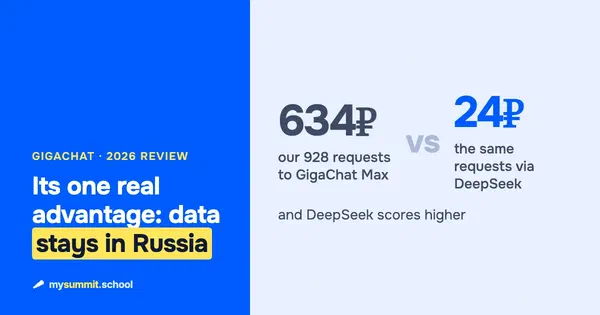
GigaChat in 2026: Honest Review – Is It Worth Using for Work?
 Part 9
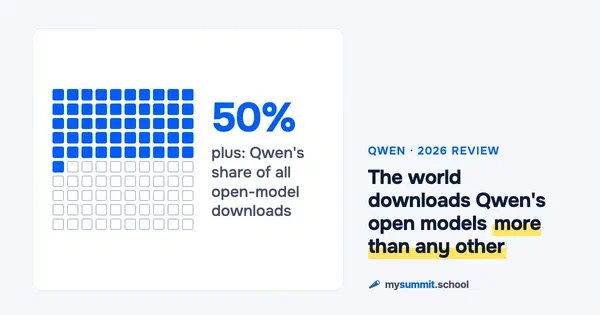
Qwen by Alibaba in 2026: Open Weights Are Back at the Top
 Part 10
LLM Benchmarks Explained: MMLU, Chatbot Arena & SWE-bench Leaderboard (2026)
 Part 11
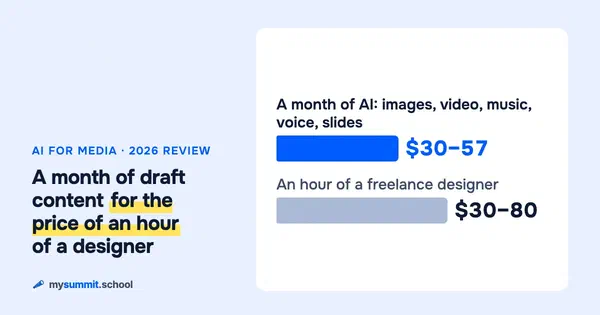
AI for Media Creation in 2026: Images, Video, Music and Presentations
 Part 12
GenAI Tools Comparison 2026: Which AI Should a Manager Choose?
 Part 13
Chat Z.AI (GLM-5) in 2026: The Chinese Model That Pretends to Be Claude
 Part 14
Kimi by Moonshot in 2026: K3, K2.6, K2.7-Code and Agents for Managers
 Part 15
GigaChat at Work: Getting the Most Out of Russia's Sovereign AI
 Part 16
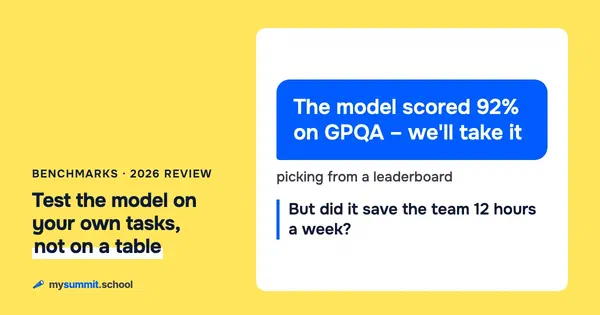
AI Benchmarks Are Losing Their Meaning – So How Do You Pick a Model?
 Part 17
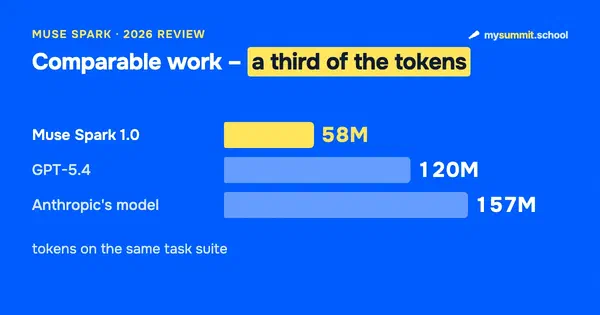
Meta Muse Spark: Meta's First Closed Model Since 2023
 Part 18
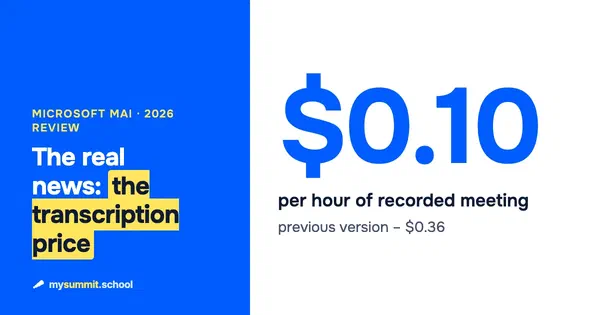
Microsoft MAI Models in 2026: What You Can Actually Use, and What It Costs
 Part 19
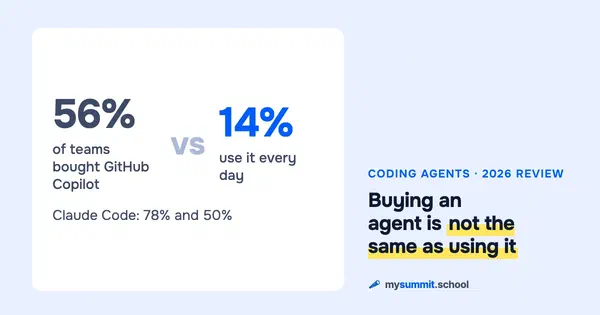
Coding Agents in 2026: Two Form Factors – Terminal and Desktop

18 years leading engineering teams. Founder of mysummit.school. 700+ graduates at Yandex Practicum and Stratoplan.